The book as your best sales tool.
For most nonfiction authors who run a firm or practice, the book's real work starts after launch, in sales conversations. This lesson covers the four places a book wins clients, the math on giving copies away, and a simple way to track it.
What you will do after this lesson
- Choose where the book goes in your sales process: before, during and after the sale.
- Work out how many copies you can afford to give and to whom.
- Set up a copy tracker so you know which books turned into conversations.
Why a book sells better than a brochure
A brochure asks for a minute of attention and gets thrown away. A book gets kept, passed on and read over several evenings. Mario Simonyan, an intellectual property attorney, put it this way: when was the last time you threw a book away? You may donate it or give it to a friend, but business cards from a conference go in the bin (Mario Simonyan's story).
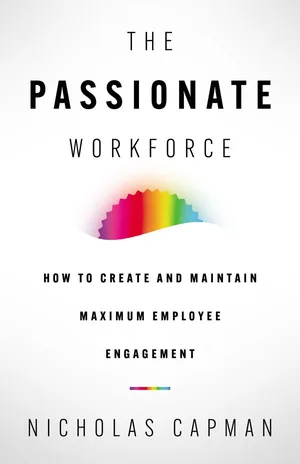
A book also changes the first conversation. Nicholas Capman, CEO of The FDA Group and author of The Passionate Workforce, says it gives enough credibility that the question shifts from "is this the real deal" to "how can you help me" (Nicholas Capman's story).
The authors in this lesson worked with Scribe Media. Their results are strong, not typical, and no one can promise them. Each method below is something you can start with a box of books.
Before the first meeting
The most direct use: mail the book to people you would like as clients, before you have met.
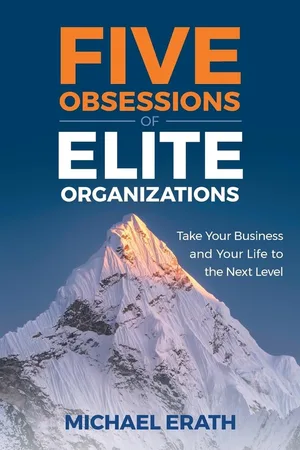
Michael Erath's coaching firm mails 75 to 100 copies of Five Obsessions of Elite Organizations a month to targeted prospect lists. Each goes by FedEx ground in a branded package, so a driver hands it to the reader, and each is logged in the firm's customer system by name and company. The book points readers to downloadable tools on pages where they can sign up, so when a reader engages, the firm can match them to the copy it sent. He calls the book the best lead magnet the firm has. In one discovery meeting, a CFO he had never spoken to already owned the book and had highlighted pages for a colleague (Michael Erath's story).
Mario Simonyan's firm does the same with cold outreach: when it contacts brands that have never heard of it, the mailed package contains a printed copy of the book (story).
Hi Priya,
I saw your team is opening a second warehouse this spring. Chapter 4 is about the first 90 days after a second site opens, which is where most of the stockouts I see begin. I thought it might be useful.
No need to reply. If it raises questions, my number is on the back flap.
Sam
Keep the list short and real: people you have a genuine reason to contact. Respect anyone who asks you to stop.
During the sale
In a sales conversation, the book becomes a reference. When a question comes up on a consultation call, Mario Simonyan's team tells the prospect that Mario covers it in chapter three, and offers to mail a physical copy or send the PDF (story).
Other ways to use it mid-sale:
- Attach the relevant chapter to a proposal, or mention it by page.
- Keep the book visible on video calls. Capman keeps it on the screen behind him in his home office, in frame for every call (story).
- Build a page of your sales brochure around it. Matt Shoup built a one-page section of his painting company's brochure around his book Painted Baby, and its title became shared shorthand with customers when a job goes wrong (story).
After the sale
Give a copy to every new client. It sets expectations, teaches your method and gives them something to hand to colleagues. Every new client of The FDA Group gets a box with the book, a thank-you card and an engraved bottle of wine. Every employee who passes 90 days gets a copy too (story).
Rachel A. Williamson wrote a 25-page implementation guide in two versions, one for business owners and one for multi-unit leaders, and includes it free with every copy ordered directly from her. She also sells signed, personalized copies through her own online shop, which gives her customer information that Amazon does not share (story).
Partners and bulk orders
Some of the best book sales come from readers who buy for their teams.
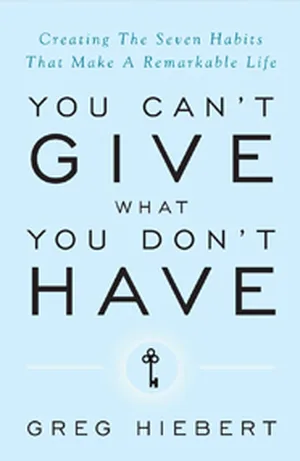
- Greg Hiebert, author of You Can't Give What You Don't Have, has had CEOs buy his book for 500 of their top leaders, and makes it required reading in the leadership programs he runs (story).
- Chris Heivly's Build the Fort, a field guide for startup community builders, is still bought in bulk by communities three years after launch (story).
- Michael Erath's firm asks the associations it sponsors to give copies to their members, and hands out books at events it sponsors (story).
- At a conference in Brooklyn, organizers put Mario Simonyan's book at the welcome desk as part of every attendee's welcome gift. Weeks later a stranger emailed him, book in hand (story).
To make bulk orders easy: publish a simple bulk price, offer signed copies, and write a one-page guide for using the book with a team (discussion questions for each chapter). Lesson 8 covers bulk orders tied to talks.
The math and the tracker
Erath puts his all-in cost at around $16 per book placed and reasons that if one in fifty becomes a client, the cost works out (story). Use your own numbers:
| Cost per copy, printed and shipped | Your number (Erath's is about $16) |
| Copies mailed per year | Say 300 |
| Total cost | 300 x $16 = $4,800 |
| Copies per new client (your guess, then your data) | Say 50 |
| New clients from the copies | 300 / 50 = 6 |
| Break-even client value | $4,800 / 6 = $800 per client |
If a client is worth well over $800 to you, the plan pays. If clients are worth less, mail only to people already in a sales conversation. These numbers are a hypothetical to show the method, not a forecast.
Track every copy in a simple sheet: name, company, date sent, why you sent it, follow-up date, and what happened (no reply, conversation, meeting, client). Mario Simonyan's firm tracks distribution rather than retail sales: through June 2026 it had placed roughly 2,000 copies that year (story). Lesson 10 turns this sheet into a scorecard.
Homework
Mark the four placements
Before, during and after the sale, plus partners. Write one action for each.
Run the math
Fill in the worked example with your own cost per copy and client value.
Mail your first 10
Ten named prospects, ten personal notes, ten rows in the tracker.
Add the book to onboarding
Decide what every new client receives, and order the copies.
Build your dated plan with the Launch Plan Builder, then add a monthly mailing day to it so the copies keep going out after launch.