How to get book reviews the honest way.
Early readers give your book its first reviews, its first word of mouth and its first proof that the ideas land. This lesson shows how to get book reviews from them while staying inside Amazon's rules, which are stricter than most authors realize.
What you will do after this lesson
- Know what Amazon allows and forbids for reviews, from Amazon's own pages.
- Build an early reader list of people who are allowed to review.
- Send an invitation that offers a free copy without asking for anything in return.
About the sources. The rules below were read on Amazon's pages on October 20, 2026 and are quoted or closely summarized with links. Amazon updates these pages. Check them before you send your first copy.
What Amazon allows, and what it does not
A review and an endorsement are different things. An endorsement (a blurb) is a quote you ask a known person for, and it goes on your cover and in the Editorial Reviews section of your Amazon page. A customer review is a reader's own opinion, posted by them on the product page. Amazon's rules on customer reviews are strict.
Allowed
- Free or discounted copies. KDP's Customer reviews help page says you may give free or discounted copies of your books to readers, "as long as you do not require a review in exchange" or try to influence the review.
- Advance reader copies. Amazon's Community Guidelines list "Review free books (advanced reader copies) from authors or publishers" among the things customers are allowed to do, with the condition that the author or publisher can't require a review in exchange or try to influence the reader's opinion.
- Asking for an honest review. The same guidelines allow a customer to post a review when encouraged to leave "an unbiased, un-incentivized review."
Not allowed
| Practice | What Amazon's pages say |
|---|---|
| Paying for reviews | Customers may not "create, edit, or remove a review in exchange for compensation, including payments, refunds, discounts, products, gift cards, warranties, or services." (Community Guidelines) |
| Adding a gift to the free copy | "Offering anything other than a free or discounted copy of the book, including gift cards, will invalidate a review," and the Amazon Community team will remove it. (KDP Customer reviews) |
| Requiring a review | Free copies are fine only if you do not require a review in exchange. (KDP Customer reviews) |
| Review swaps between authors | Listed as not allowed: "An author posts a positive review about a peer's book in exchange for receiving a positive review from the peer." (About promotional content) |
| Friends, family, staff, business associates | Customers may not post reviews on products from authors they have a personal connection with (Community Guidelines). A relative, close friend, business associate or employee posting a review to help boost sales is listed as not allowed. (About promotional content) |
| Conditioning future perks on reviews | Any attempt to influence reviews is prohibited, "including conditioning any future benefit on writing a review," such as future free copies or continued membership in a program or club. (About promotional content) |
| Review clubs | Reviews from members of clubs that rate reviewers or let sellers monitor their reviews are listed as not permitted. (About promotional content) |
| Reviewing before reading | Customers may not post a review before the product has been delivered to them. (Community Guidelines) |
Disclosure
Disclosure works differently outside reviews. Amazon's promotional content page says that relatives may post about an author's book to their own followers if the relationship is disclosed in the post, giving the example "Check out my spouse's new book!" Anyone paid or given a product in exchange for a post must clearly disclose it. In the product page's questions and answers, an author may answer if they disclose it ("I'm the author of this book."). Disclosure does not make a customer review from a close friend or a paid reviewer acceptable; those are not allowed at all.
The Community Guidelines also note that Amazon may take legal action when someone violates laws, including the Federal Trade Commission Act. Paying for reviews is not a gray area.
Build the early reader list
Your early readers should be people who care about the topic, who match the reader from Lesson 1, and who are not your relatives, close friends, staff or business associates. Here is how common groups sort out.
| Group | Early reader? | Best way to involve them |
|---|---|---|
| Newsletter subscribers you do not know personally | Yes | Invite them to apply for a free advance copy |
| LinkedIn followers in your reader's role | Yes | Post an open call for pre-readers and choose from those who ask |
| Podcast hosts and newsletter writers in your field | Yes | Send a copy with a note; they may review it, mention it or invite you on (Lesson 5) |
| Well-known people in your field | Yes, for endorsements | Ask for a blurb for the cover and Editorial Reviews |
| Current clients | Use caution | A client may count as a business associate. Ask for an endorsement or a testimonial on your own site instead |
| Relatives, close friends, employees | No customer reviews | Ask them to buy it, give it, and share it with the connection disclosed |
| Other authors offering to trade reviews | No | Decline |
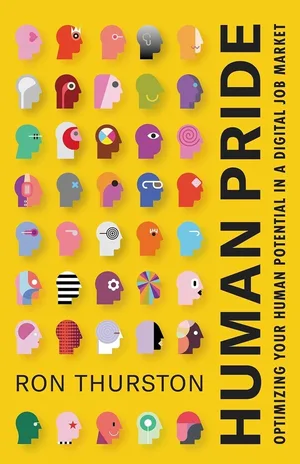
How many? More than you think. Not everyone who says yes will read in time, and fewer still will post. Ron Thurston asked his LinkedIn audience for pre-readers for Human Pride. Several hundred people asked, he chose about a hundred, and the result was about 20 reviews on launch day (Ron Thurston's story).
The invitation
The invitation must offer the copy freely and leave the review entirely up to the reader. Here is a sample that does that.
Subject: An early copy of my book, if you'd like one
Hi Dana,
My book on cutting stockouts at mid-size distributors comes out on March 4. You run operations at a distributor, so you are exactly the person I wrote it for, and I would like to send you a free early copy.
There is nothing you need to do in return. If you read it and want to share what you think, anywhere, I would value your honest opinion, good or bad. If you do not get to it, that is fine too.
Reply with your mailing address (or "ebook") and I will send it this week.
Thanks,
Sam
What this sample avoids: no promise of a gift or a future copy in return, no request for a star rating or a positive review, no deadline tied to the copy, no "launch team" perks for reviewers. Each of those would fall into what Amazon's pages describe as influencing or compensating a review.
Timing and follow-up
- About 6 to 4 months out: open the call for early readers and choose your list.
- About 3 to 2 months out: send copies (print or ebook) with a short note on when the book goes on sale.
- Launch day: one email to early readers saying the book is live, with the link. Amazon's rules let you say an honest review would be welcome. Do not chase, and do not ask for stars.
- After launch: thank anyone who wrote to you, whatever they said. If a review breaks Amazon's guidelines, KDP's help page says to use the Report link under it. Do not argue with honest negative reviews.
These timings are a common pattern, not an Amazon rule. The Launch Plan Builder puts each of these steps on a date from your launch day.
Giveaways before launch
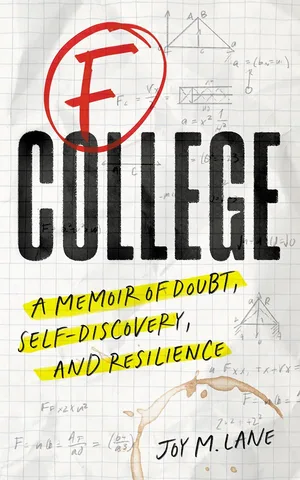
Two Scribe authors used Goodreads giveaways to find readers they did not know. Joy Lane's F College had a giveaway of 100 copies ahead of launch, and 240 people had signed up before she had told her friends the book existed (Joy Lane's story). For Human Pride, Ron Thurston ran a 100-copy Goodreads giveaway on launch day, and close to 500 people entered (Ron Thurston's story). Check Goodreads' current giveaway terms yourself before you plan one.
How authors did it
These are Scribe Media authors. Their results are strong, not typical, and no one can promise them. Their methods are the part to copy.
Rachel A. Williamson took the reviewer list Scribe asked her for and doubled it, and she planned a strategic list for free copies rather than mailing them at random. Those mailed copies produced a speaking booking and a consulting client (story).
Ari Meisel sent advance copies of his book to reviewers before launch and heard back from well-known names, including Tony Robbins and Daymond John, who sent back short reviews of the book (story). He had left a traditional publisher partly because it charged him over $10 a copy for his own book, which made giving copies away hard.
Kyle Thiermann mailed about 150 personalized, signed books to influencers and podcast hosts around his launch of One Last Question Before You Go. He summed up his strategy as "givers are getters" (story).
Homework
Read the three Amazon pages
The Community Guidelines, About promotional content and KDP Customer reviews. Fifteen minutes now saves removed reviews later.
List 100 possible early readers
Sort them with the table above. Move relatives, close friends, staff and current clients to the "share and endorse" list.
Write your invitation
Adapt the sample. Read it once more and remove anything that sounds like a condition.
Ask for three endorsements
Pick three respected people your reader would recognize. Ask each for a two-sentence blurb for the cover and Editorial Reviews.
Sources, read October 20, 2026: Amazon Community Guidelines; Amazon: About promotional content; KDP: Customer reviews.