Book promotion services, an honest buyer's guide.
The help a nonfiction author can hire, what each kind can and cannot do, how it charges, the red flags, the questions to ask, and which parts you can do yourself.
Start here. Before you compare services, write down your book's reader and its one job: clients, talks or readers. Lesson 1 takes about an hour. A good provider will ask for it on the first call.
The seven kinds of service
"Book promotion services" covers very different work. In plain terms:
1. Publicist
A publicist pitches you and your book to journalists, editors and producers: articles, interviews, op-eds, sometimes radio or TV. A good one knows which outlets cover your subject. Nobody can make an editor say yes, so you are paying for the pitching.
2. Podcast booking
A booker finds shows, pitches the host, and schedules the interviews. It often suits nonfiction, because hosts need guests and a book gives them a topic. The limit: a booker who does not know your reader may fill your calendar with shows your reader never hears.
3. Amazon ads management
A manager builds and tunes Sponsored Products campaigns, the ads that show your book in Amazon search results and on other books' pages. Ads bring shoppers to the page; they cannot fix a weak cover or description, and they reach strangers browsing Amazon, which matters less if the book's job is clients you could name.
4. Launch team management
Someone recruits early readers, sends copies and reminds them at launch. Useful admin, unless it slides into requiring reviews for the free copy, which Amazon does not allow.
5. Email promotions and reader newsletters
You pay a newsletter that sends book deals to its subscribers to feature your book on a set date, usually with the ebook discounted. This suits a book whose job is readers in volume. It does little for a book whose job is ten new clients, because deal-seekers are rarely those clients.
6. Social media management
Someone writes and schedules posts on your accounts. It saves time, but puts another voice under your name where future clients judge whether you know your subject. Keep the ideas and the replies yours.
7. Full-service marketing
A firm bundles several of the above with a plan and a project manager. The risk is paying for pieces your book does not need.
Side by side
| Service | Can do | Cannot do | Best for the job of |
|---|---|---|---|
| Publicist | Write and send pitches to press, follow up, prepare you | Promise coverage or sales from it | Readers, authority |
| Podcast booking | Find shows, pitch hosts, schedule | Make a host say yes; choose shows your reader hears without your input | Clients, talks, readers |
| Amazon ads management | Build and tune campaigns, report on spend and sales | Fix the book page; reach named prospects | Readers |
| Launch team management | Recruit early readers, send copies, keep them informed | Require or promise reviews within Amazon's rules | Readers |
| Email promotions | Put a discounted book in front of deal-seekers on one date | Find your clients or buyers at full price | Readers |
| Social media management | Schedule posts, keep accounts active | Replace your voice and your replies | Readers, authority |
| Full-service marketing | Plan and coordinate several services | Know your reader better than you do | Depends on the pieces |
How they charge
Prices vary widely, so this describes how each kind of service bills. Get every price in writing.
- Monthly retainer for a set term. Common for publicists, podcast bookers and social media managers. You pay each month whether or not anything is placed, often for a minimum term.
- Pay per placement. Some bookers and publicists charge only when an interview or article is confirmed. Ask what counts as a placement.
- Per promotion. Reader newsletters charge a fee for one feature on one date.
- Management fee plus ad spend. Amazon bills Sponsored Products per click. KDP's Advertising for KDP books page says they are "cost-per-click (CPC) which means you only pay when customers click on your ad," and that you set your own bid and budget. A manager's fee comes on top.
- Project fee. Common for launch team management and full-service packages: one price for a defined scope and period.
Say you are a consultant whose book's job is five new clients a year. A booker offers a three-month retainer. Ask for the 20 shows they would pitch. If eight are shows your clients listen to, the retainer buys hours you do not have. If none are, it buys interviews that will not reach your clients, however many there are.
Source: Amazon KDP, Advertising for KDP books, checked October 21, 2026.
Red flags
Anyone selling reviews or review swaps
Amazon's Community Guidelines say customers may not "create, edit, or remove a review in exchange for compensation, including payments, refunds, discounts, products, gift cards, warranties, or services." Amazon's page About promotional content lists, as not allowed, "an author posts a positive review about a peer's book in exchange for receiving a positive review from the peer." KDP's Customer reviews page allows free or discounted copies "as long as you do not require a review in exchange or attempt to influence the review."
The law points the same way. The FTC's Consumer Reviews and Testimonials Rule went into effect on October 21, 2024. It bars selling consumer reviews, makes a business liable for buying reviews it knew or should have known were false, and allows incentives only without a requirement that the review say something particular. A service that sells reviews, promises a number of reviews, or runs a "review exchange" is asking you to break Amazon's rules. Lesson 4 sets out what is allowed and how to get honest reviews.
Promised bestseller lists
Nobody can honestly promise a place on a newspaper or national bestseller list. Some packages promise an Amazon category "#1" badge instead. KDP's Sales ranking page says ranks are "based on customer activity of your book relative to the activity of other books," and that rank "is not an accurate way to track your book's activity." A small-category badge says little about clients or talks. Lesson 3 covers rank and badges.
Promised sales
Sales depend on readers choosing to buy. A promised number of copies sold usually means discounted copies, bulk buys or worse. Ask how it would be reached.
Other warning signs
- They will not name the outlets or shows they plan to pitch.
- They own the assets: the ad account, the email list or the social logins are in their name, not yours.
- Reports count activity only, never interviews aired or conversations.
- A long minimum term with no way out.
Sources: Amazon Community Guidelines; Amazon, About promotional content; KDP, Customer reviews; KDP, Sales ranking; FTC, Consumer Reviews and Testimonials Rule: Questions and Answers. All checked October 21, 2026.
10 questions to ask before signing
Who is my reader, and what is my book's job?
Ask them to say it back. If they cannot, every pitch will be generic.
Which 20 outlets, shows or lists would you pitch first?
Get names before you sign and check them against where your reader pays attention.
Who does the work?
Ask to meet the person who will.
What exactly do I pay, and when?
Monthly fee, minimum term, per-placement fees, ad spend, and anything billed separately.
What counts as a result?
Agree in writing: pitches sent, interviews booked or interviews aired.
How will you handle reviews?
The only right answer: free copies with no review required, and an invitation to leave an honest one.
Whose name are the accounts and lists in?
The ad account, reader list and contacts should stay yours.
What will you report, and how often?
Ask for a sample report with the client's name removed.
What do you need from me each week?
Interviews and approvals still take your time.
How do I end the agreement?
Notice period, refunds, and what happens to work in progress.
What you can do alone
For a book whose job is clients or talks, the most useful work is often what an author does best, because you know the subject, the reader and your field. Each lesson walks through one piece.
| Instead of hiring | Do it yourself with | Time it takes |
|---|---|---|
| Podcast booking | Lesson 5, the podcast tour | About two hours a week |
| Launch team management | Lesson 4, early readers and reviews | A few hours a week for two months |
| Amazon page set-up before any ads | Lesson 3, your Amazon book page | An afternoon |
| Social media and newsletter | The author newsletter guide and Lesson 9, year two | An hour or two a week |
| A full-service plan | Lesson 2, the one-page plan and the Launch Plan Builder | An evening, then weekly |
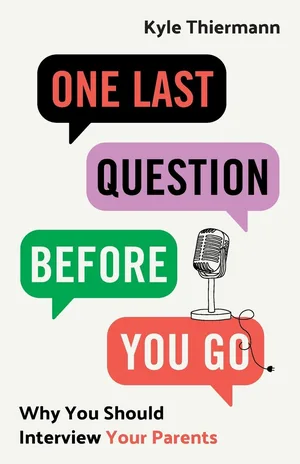
Scribe Media authors have done each of these pieces themselves. Hadley Ott, author of Drug-Free Crohn's, did his own outreach on a low budget, and used one introduction at Notre Dame to pitch a hundred more schools. The book has taken him onto about 15 podcasts and to a talk at Ole Miss, and his lesson is that it takes something like a hundred reaches for one yes (story). Ron Thurston ran his own early reader team for Human Pride: he asked his LinkedIn audience for pre-readers, chose about a hundred from several hundred who asked, and had early reviews on launch day (story). Kyle Thiermann mailed about 150 personalized signed books to influencers and podcast hosts and coordinated about a dozen podcast interviews and newspaper articles for launch week (story).
Others mixed the two. Devin Fish lined up his podcast interviews with a PR team (story). Richard Shaull runs ads on Amazon and also offers to ship the book free to the exact buyers he wants: "We run ads on Amazon, but we also give the book away," he said on Author Hour (interview). Mario Simonyan's firm has distributed about 10,000 copies without running a single ad (story). These are strong results, not typical ones, and nobody can promise them.


A decision rule
Hire help for a piece of work when all three are true:
- You can name the reader and the book's job, and the service serves it.
- You know what good looks like, from doing a little of it or reading the lesson.
- Your limit is hours, and the price is less than those hours are worth to you.
If the first is false, start with Lesson 1. If the second is false, do a month of the work yourself first. If you published with Scribe Media, its marketing team offers several of these services, listed on its book marketing page. For more things to try, cheap and free, see 38 book promotion ideas.
See which pieces fit your weeks
Enter your launch date, the book's job and the hours you have. The plan shows what you can do alone and where help would save time.